
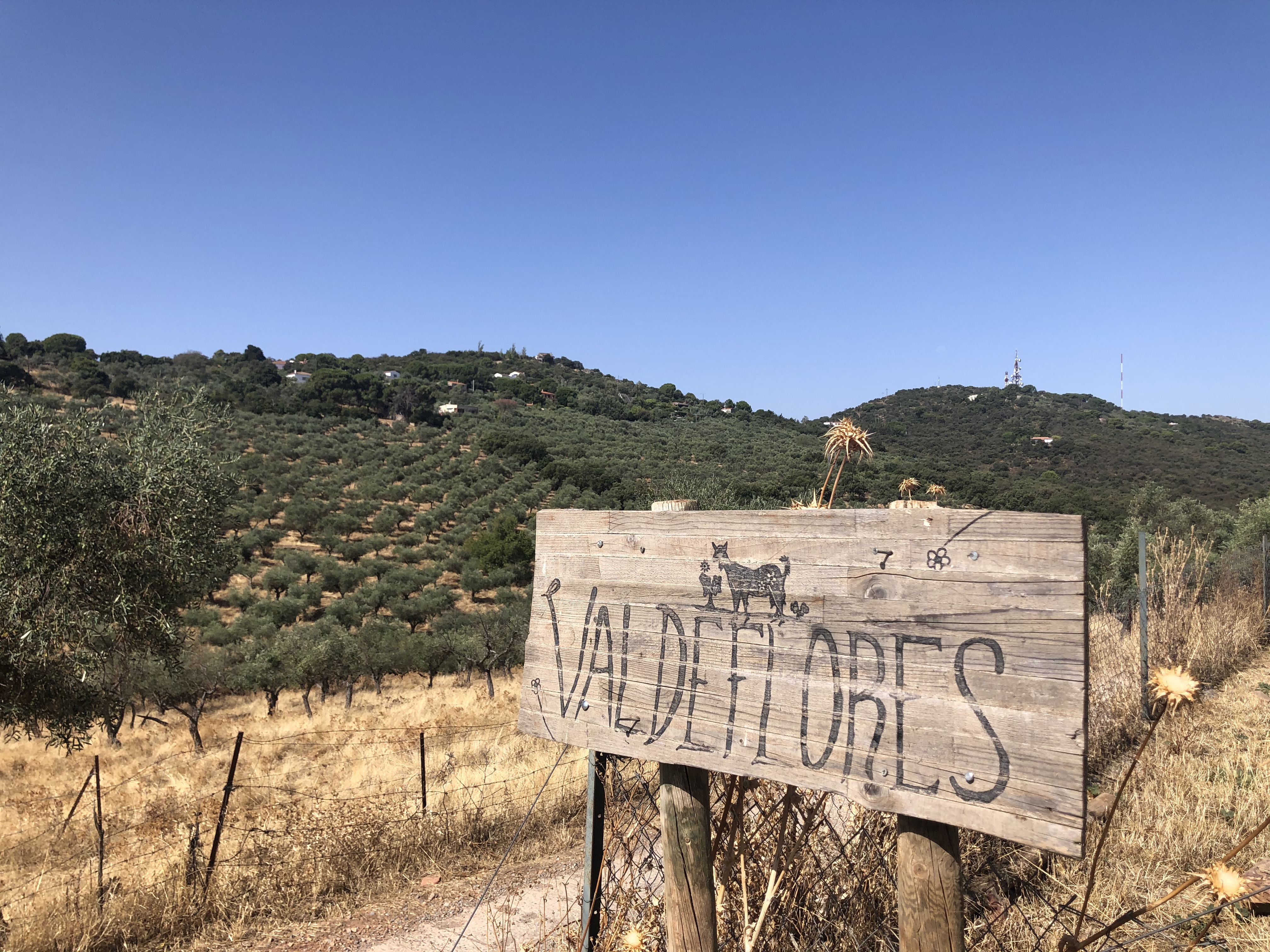
Cáceres, Spain, October 2021.
In English, Valdeflores means ‘Valley of Flowers’. Sounds tranquil, doesn’t it? And it most certainly is.
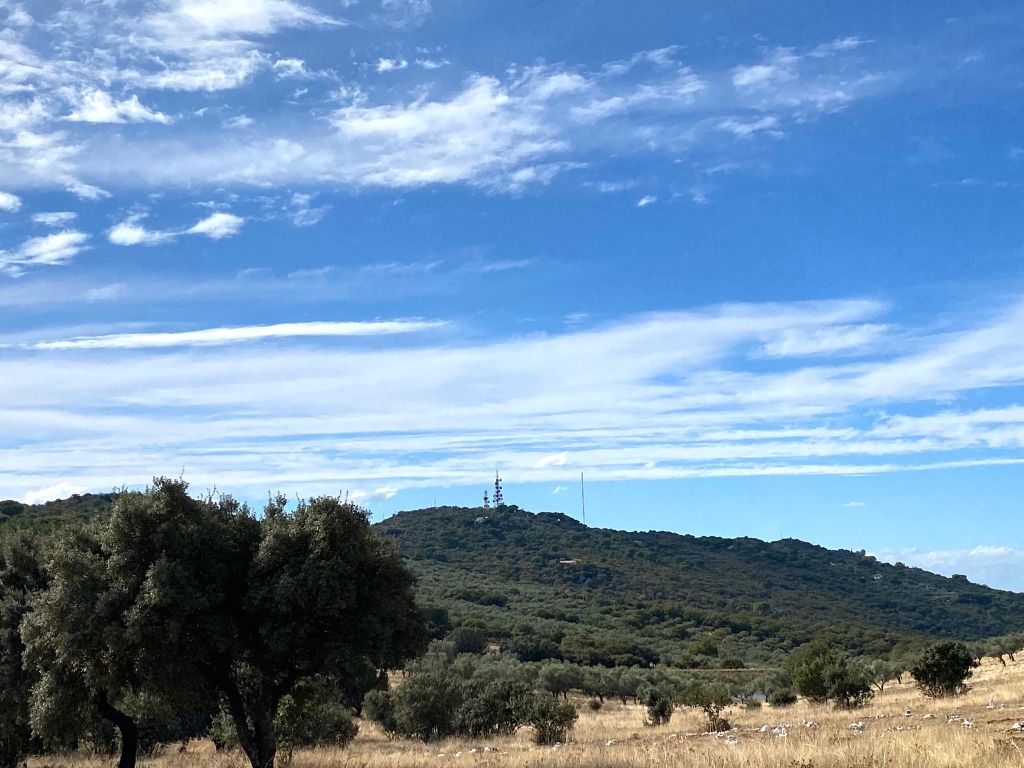
Valdeflores is a natural paradise bursting with flora and fauna, including protected species of plants and animals. The valley sits happily within a large mountainous natural park which enjoys the protection status as an official part of the Zone of Regional Interest known as Llanos de Cáceres y Sierra de Fuentes. In fact, the entire area was officially declared a Zone of Special Protection for Birds in 1989 and a Protected Natural Area in 1998. Its large mass of Mediterranean forest also, crucially, acts as the lungs of the ancient provincial capital of Cáceres, which is nestled less than a mile away below. Valdeflores has more protected statuses than you can shake a big stick at, so it seems almost impossible that a hugely damaging mine could be built there.
Over the past six years, however, dubious mining companies have consistently been probing the area and carrying out illegal works as they try their utmost to gain licenses and permissions that will allow them to exploit the area to extract the lithium or “white gold” — as it is now commonly referred to — that lies beneath.
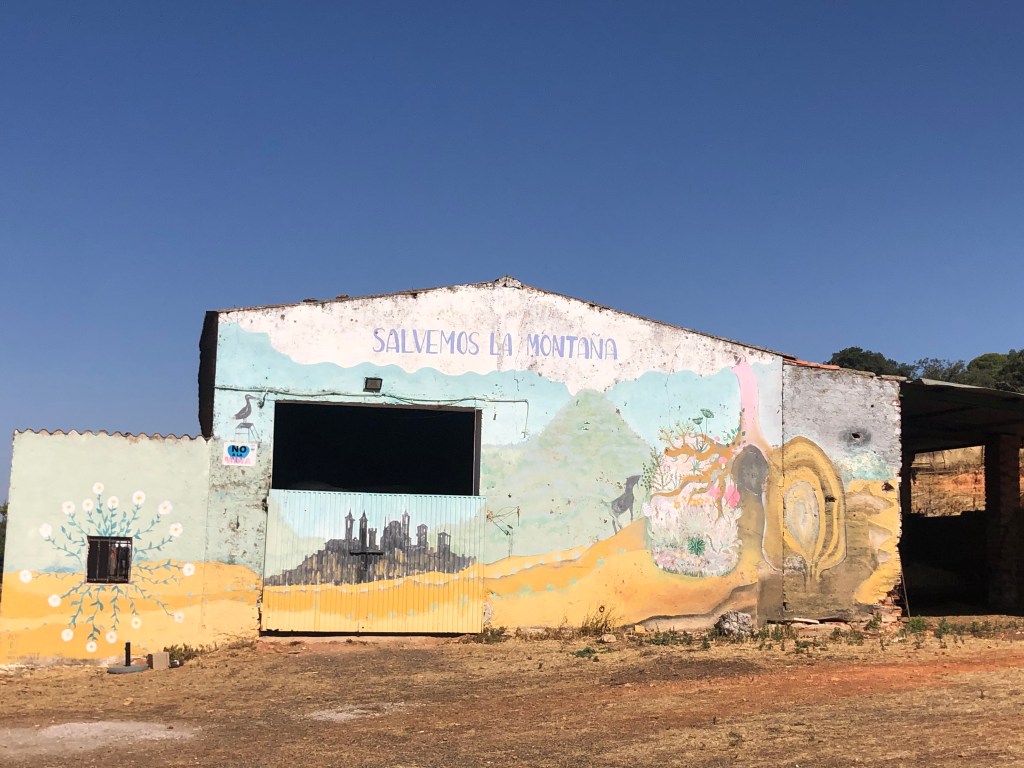
Currently, there is a war raging to save the “mountain,” as the area is also affectionately known as. In fact, the mountain is where the revered patron saint of the City, La Virgin de la Montaña, watches over the city from a large sanctuary. The local population, supported by the city council, are winning the war over the mining companies one legal battle at a time, providing hope against the backdrop of fear the threat of a new mine here has caused. Through sustained activism, the local population, led by the campaign group Salvemos La Montaña (Let’s Save The Mountain), have bravely fought against the multi-million-backed mining companies.
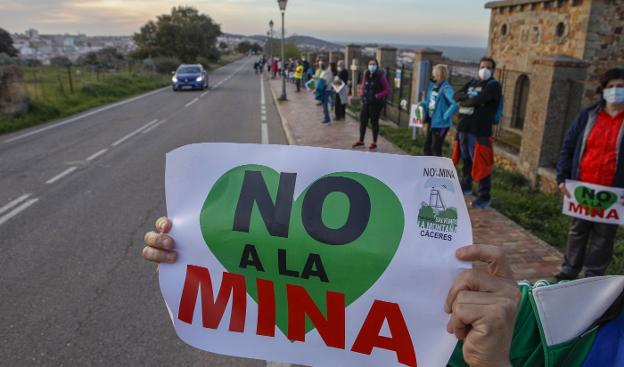
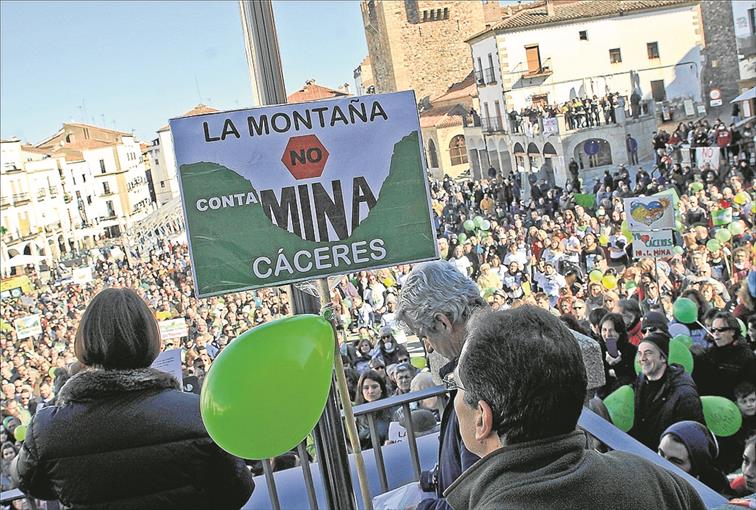
But the population of Cáceres haven’t won their war yet. As the European Union continues to push for and support projects which will enable it to compete in the global lithium market, it is dangling a huge carrot which the mining companies continue to follow — even though their success would mean the destruction of huge swathes of natural habitat, pollution of the air, and contamination of the vital water aquifers in an area with a track record of suffering severe droughts.
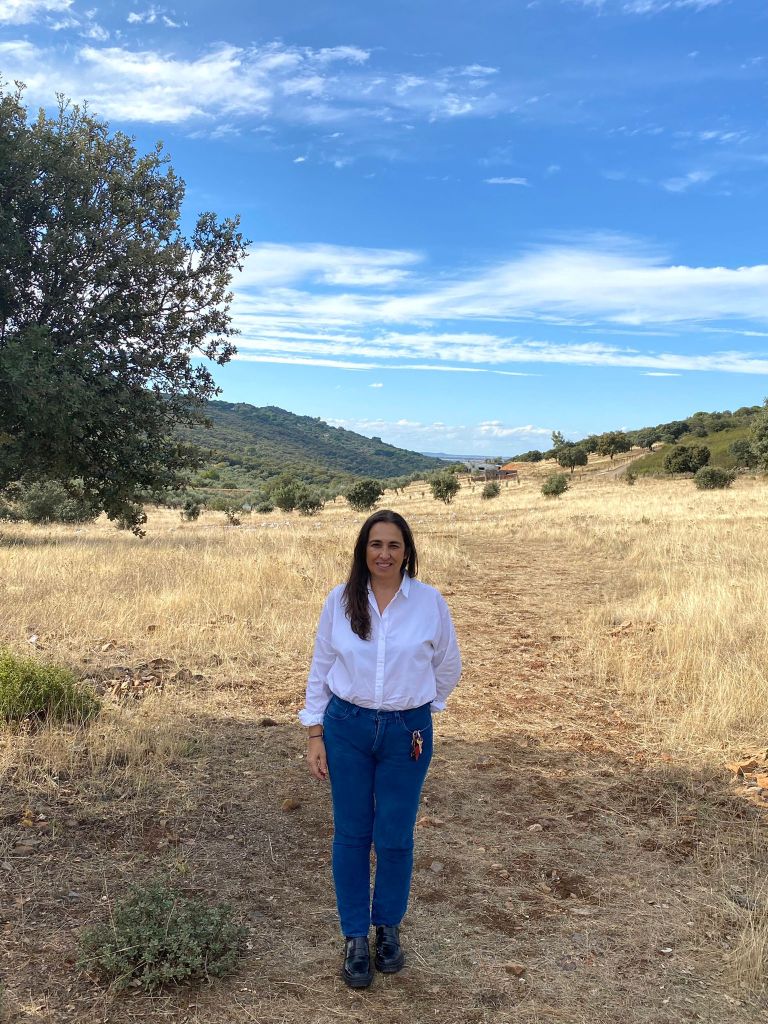
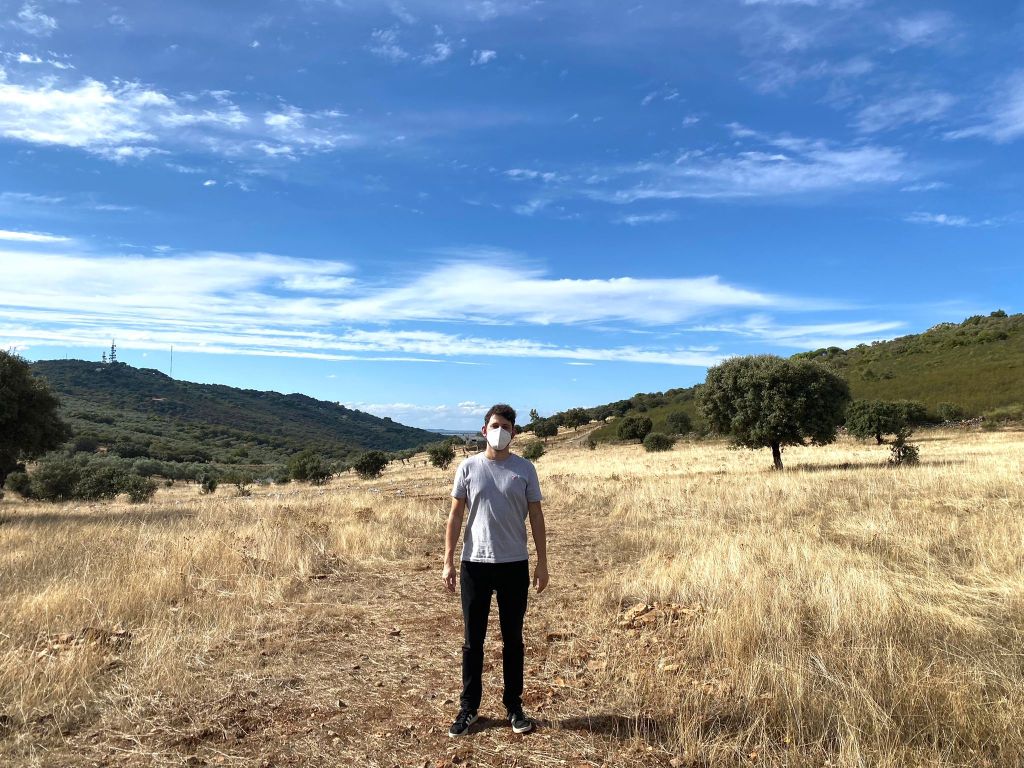
This month, as the cast and crew of Games of Thrones started a ten-week filming period of the new sequel in the UNESCO-protected city, I met with Maribel Rojo, spokeswoman of Salvemos la montaña, on the sunny mountainside overlooking the Valley of Flowers.
As bees buzzed around the surrounding trees and the warm autumn sun kissed our faces, a Bonelli’s eagle flew overhead. We were in a truly magical place.
Maribel explained at length the sacred importance of the area. Its forests — a comparative rarity for large areas of Spain which has faced extreme deforestation for centuries — are the lungs of Cáceres, a city of 100,000 people less than a kilometre from Valdeflores. We can even measure the distance from the mountaintop monastery next to the valley right down to the city centre’s main square in people. Last spring a chain of what was later said to be more than 3,000 people demonstrated just how close the danger is.
Rare and endangered birds are among the huge numbers of animal and plant species that have made the area their home for millions of years. The area is also the spiritual heart of the city; a place people go to escape daily life whether by hiking, viewing the city below, having family picnics, or praying.
Now, you may be thinking that this sounds like a terrible situation for the wildlife and people of Cáceres. And rightly so. But aren’t our petrol and diesel cars being replaced by electric cars that use lithium batteries and can help save the planet?
OK, it’s time for some wider context — so let’s talk about lithium for a moment.
Lithium is one of the essential elements to make lithium-ion batteries alongside other metals including cobalt and nickel. These batteries power electric vehicles as well as our phones, tablets, laptops, e-bikes, e-scooters, and many other battery powered gadgets and tools.
In theory, electric vehicles make perfect sense. They are powered from the same source, and by cutting out the use of petroleum, we would help reduce the total global use of fossil fuels while also freeing our towns and cities of the harmful localised carbon monoxide pollution that plagues them. However, the extraction of lithium, cobalt and nickel is often carried out in the poorest areas of the world, where the governments and mining companies involved often have little concern for the protection of wildlife, water supplies, or people.
For example, huge amounts of lithium comes from some of the driest areas on earth — including the Atacama Desert in Chile, where lithium is extracted from enormous salt flats (or salars) which use up all of the local water supply. In doing so, this contributes to the killing of wildlife and makes the area inhospitable for the local animal and human population.
According to reports, around two-thirds of the world’s mined cobalt continues to arrive from the cripplingly poor and war-torn Democratic Republic of Congo, where cobalt mining is a huge human rights disaster. Nickel mining in countries such as Australia, Canada, Indonesia, Russia, the Philippines, and Cuba has also been found to be highly polluting to the environment. If you were ever in doubt of the current true cost of electric vehicles and smart phones, you should watch DW’s short documentary, The true cost of electric cars.
World governments, particularly those in the Global North, are encouraging the search, extraction, and use of lithium to power the electromobility revolution. This often comes at the expense of wildlife destruction, water shortages, pollution, and contamination in poverty-stricken areas of the Global South. To make the revolution a reality, more lithium-ion batteries need to be made, which means more lithium needs to be extracted from the ground. Now, the mining companies are coming closer to home.
So, while the mining and extraction of lithium is one of the biggest economic races in the world right now (and will be an important factor in shaping world economies for at least the next decade to come), we must continue to ask the question: at what expense?
Are electric vehicles worth the extraction of lithium if it is going to cause air pollution and habitat destruction, as well as exhaust and contaminate natural water supplies?
There is a way, say scientists. A clean way…
It’s all about how and where the lithium is extracted that matters. At the moment, extracting lithium from the ground can be accomplished via three main methods: extraction using hard rock mining, extraction from underground reservoirs, or extraction from geothermal water. However, only one of these is sustainable.
Extracting lithium from geothermal waters has only a tiny environmental footprint in comparison to hard rock mining or extraction from underground reservoirs. There are geothermal locations around the world, including a site in Cornwall with “globally significant levels”.
The popular podcast The Slow Newscast featured an episode on geothermal extraction of lithium at the Salton Sea in California, an area which has been devastated by fifty years of contamination from farm runoff. Geothermal lithium is their new hope.
Near the end of the podcast Jim Turner, the Chief Operating Officer at Controlled Thermal Resources, explained how lithium and other elements can be extracted using a very long series of heavy steel poles which drill down 8,000 feet into the earth and extract brine, which is naturally occurring in the ground and has been heated to around 370 degrees by the geothermal activity. This extracted brine water contains dissolved lithium as well as sodium, potassium, calcium, strontium, and caesium. This kind of extraction of lithium is a completely green solution according to an analysis by the raw materials experts Minviro.
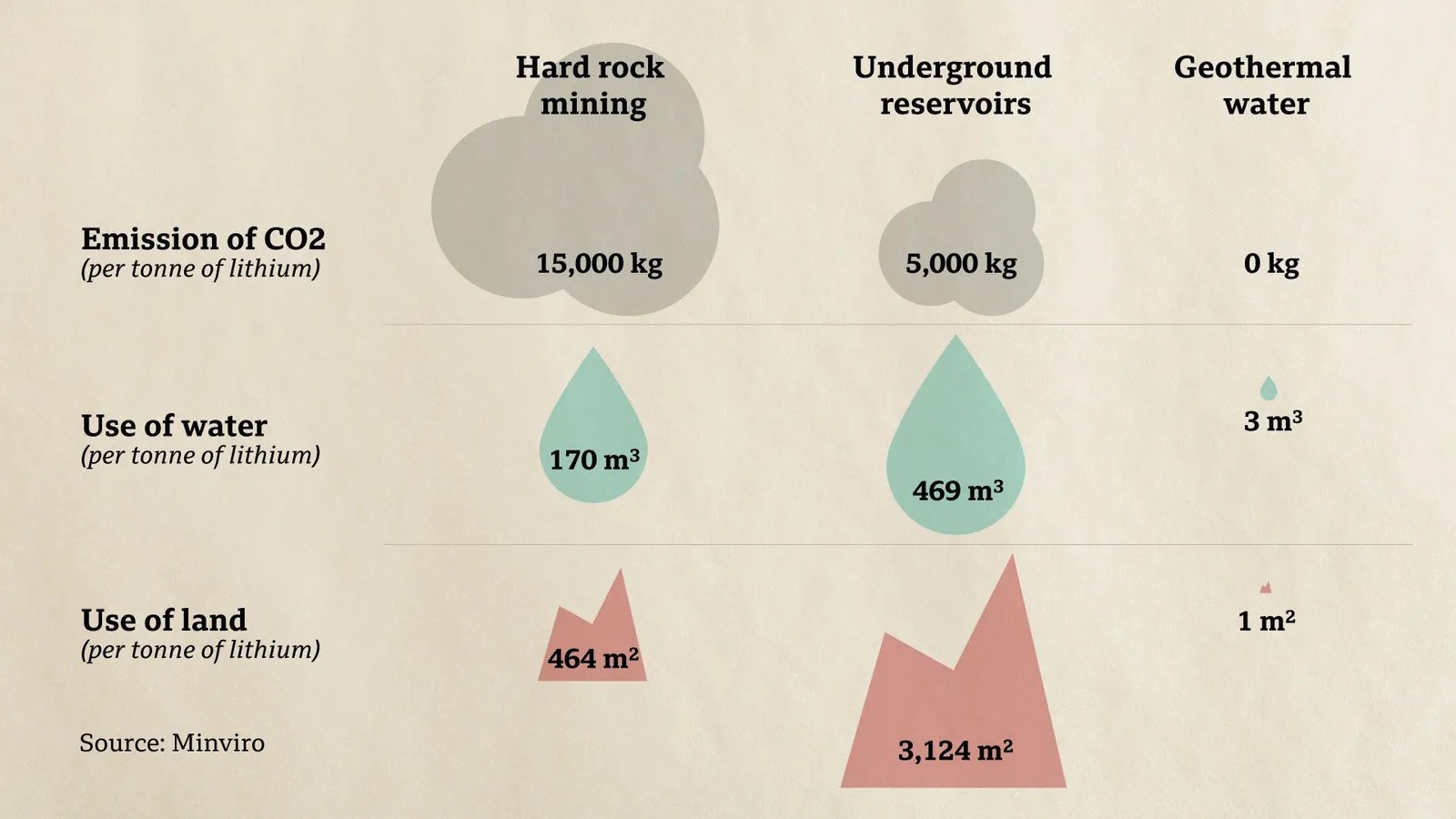
In Cáceres, hard rock mining was what Infinity Lithium, the Australian mining company in charge of the project (more on them later), had planned in Valdeflores. The company would have cut an enormous open pit mine out of the mountainside, thus destroying enormous areas of wildlife. The extracted rock would then be roasted at extremely high temperatures using fossil fuels to extract the lithium. This destructive process would have left massive scars on the landscape, requires a large amount of water and releases 15 tonnes of CO2 for every tonne of lithium extracted.

After five long years of championing this method and a string of continually unsuccessful applications, numerous defeats in the courts and multiple large fines for carrying out illegal probing works, Infinity Lithium have changed their tack. With all seemingly lost, they are moving to option two: mining lithium from underground reservoirs. In other words, another highly damaging strategy.
In October 2021, Infinity Lithium announced to their investors that they were investigating the possibilities of an underground lithium mine. Mining the underground reservoirs is now their goal. Although it produces less air pollution, it would contaminate the local aquifers to an ever greater extent while also stripping the heart out of the mountain. In fact, the company — which is on the Australian stock exchange — admitted to their investors in their most recent scoping study that the viability of whether the mine was even technically possible was based on ‘low-level (accuracy) technical and economic assessments’.
Wait a second, who are Infinity Lithium?
Well, there are actually two main companies involved. The main company, investor financed Australian mining company, Infinity Lithium, formerly Plymouth Minerals, which sits on the Australian stock exchange and has a 75% stake in the project in Cáceres. Confusingly, Infinity Lithium’s ownership is represented through a subsidiary company known as Extremadura Mining S.L. The other 25% of the “project” is owned by Spanish company Valoriza Minería — a subsidiary of the Spanish construction giant SACYR which sits on the Spanish stock exchange and used to own a 20% stake of Spanish oil giant Repsol’s shares. (In 2011, in the middle of the crippling Spanish financial crisis of 2008-2014, Repsol bought half of SACYR’s stake back in order to save the shares from being seized in a foreclosure). These two (or was it four companies) have since created yet another company, Tecnología Extremeña del Litio, which is the name of the joint venture involved in the “project,” which has been given the generic name San José Valdeflórez.
Are you confused yet? I know I was. Why do companies create various new companies for this type of activity? If you answered “to protect themselves,” then you’re on the money. Infinity Lithium and SACYR are protecting themselves with as many shell companies (or in other words, legal layers) as possible because they know they are going to break the law. In fact, they already have. Numerous times. They also know that what they are doing is highly contentious and unpopular. They also know that if and when it all goes wrong they can walk away scott free and clean their hands of the calamity they leave behind. Yes, ladies and gentlemen, this is modern capitalism. It’s all about the profit. Nature, human lives, and the planet just don’t matter to these companies. But you knew that by now, didn’t you?
Lies, lies, lies…
On the mining companies’ Spanish website, which is solely aimed at fooling the local population, one can see all the trappings of deceit. A family-friendly cartoon tells us “there is nothing more important than the earth where we live,” and that “it isn’t true that people’s health, the water or the air are in danger.” It also speaks repeatedly of job creation.
It is true that Extremadura is the poorest region of Spain and it does have previous mining history. In the past, tin, and turquoise were extracted alongside a small amount of lithium, at the old Valdeflores mine, alongside other mines in the area which extracted minerals such as phosphates. Up until about sixty years ago, the mines were an important part of the local economy and to some extent, local culture. However, since their closure, the city has found other sources of income centered around tourism and hospitality. In fact, the closed-pit mines had severe health effects upon local human and animal populations which have been revived since the mines closure. These days, the local population is content to keep its proud mining history, as just that — history.
Extraction using the clean, green, geothermal method is possible in Spain. If we are to make lithium mining sustainable, this needs to be the objective for the EU, national and regional governments, and mining companies alike.
We must find green alternatives to enable a human future on Earth. Solar, wind, and wave power are tried and tested and their use must be increased. Fossil fuel use must be eradicated, and quickly. Airplane use must be controlled and carbon passports considered. Electric vehicles using lithium batteries can also help. However, this is entirely based on whether the lithium extracted is using clean, geothermal methods. We, the Earth’s citizens, must put pressure on governments and mining companies’ choices of where and how they establish lithium mines. Transparency throughout the process is crucial. Let’s put nature and life over profit when it comes to this so-called “Green Energy.”
In the words of Guatemalan activist and indigenous leader Lolita Chavez (who found asylum in Spain after being attacked and threatened with death and forced to flee her country of birth),
“People are closely linked to [the idea that] “it is not possible,” “we cannot”, “it is already authorized.” It is always heard in Europe that if “it was approved, it cannot be,” but this is not the reality.”
And she’s right. Although it shouldn’t be like this, we, the people, are the last line of defence for protecting our health and the natural life around us and we must be prepared to fight for that. Maribel and the people of Cáceres have proved that this fight can be won.
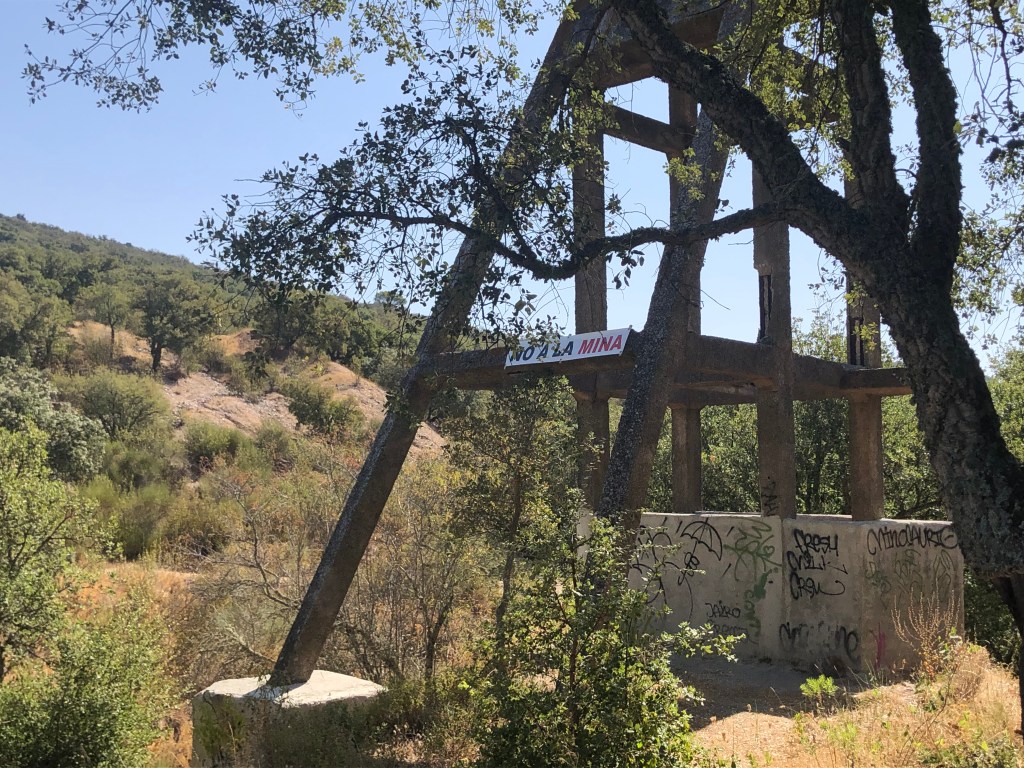
¡No a la mina! No to the mine!
You can help the Salvemos la montaña movement by signing their petition, donating to their forthcoming crowdfund and by writing to the mining companies to oppose them.



 The Bowden Report
good stuff brother